When we think about the future it can be terrifying. No one ever knows with absolute certainty what’s next, and to confront that notion is like staring over a steep edge into an endless abyss. It’s so much easier to focus on the present, even easier to dwell on the past. Looking to the future is like staring into the sun: you can’t really look right at it without eventually needing to shield your eyes, and it often leaves us with many more questions than answers.
What lies ahead for myself, for you, for us? What’s just around the corner or lying in wait farther down the road? Is there meaning or purpose to life on Planet Earth, and if so what is it? Can it ever truly, fully be grasped? What the hell are we all doing here?
Queer futurism is the use of futuristic and science-fiction themes in art to imagine possible futures. For queer people certainly and, by extension, for all people. It’s a creative point of view that looks forward, and dreams of what could be through art, literature, fashion, music, spirituality, sexuality and other forms of expression. It’s a leap forward from our existing structures into that dark abyss. It’s future mythology, spirituality that celebrates humanity, creativity and sexuality in all their forms. It’s time travel to a place where we might have opportunities and face problems that are different than the ones we face in our present.
Any conversation about what queer futurism is would be premature without first acknowledging and honoring Afro-futurism. It could be argued that futurism has always existed in some form, and though Italian futurism came first in the early 20th century, Afro-futurism is the first futurism by, for and about a historically oppressed group that seeks to pave the way froward from their oppression.
Some queer futurist themes are present in Afro-futurist works and vice-versa. Identity is complex, often intersectional, so both futurisms (as well as other futurisms) are in constant conversation with one another. They both approach art with a perspective that’s informed by an understanding of a complex, often troubling past, contemplation of desires and frustrations about the present, and optimism for the future.
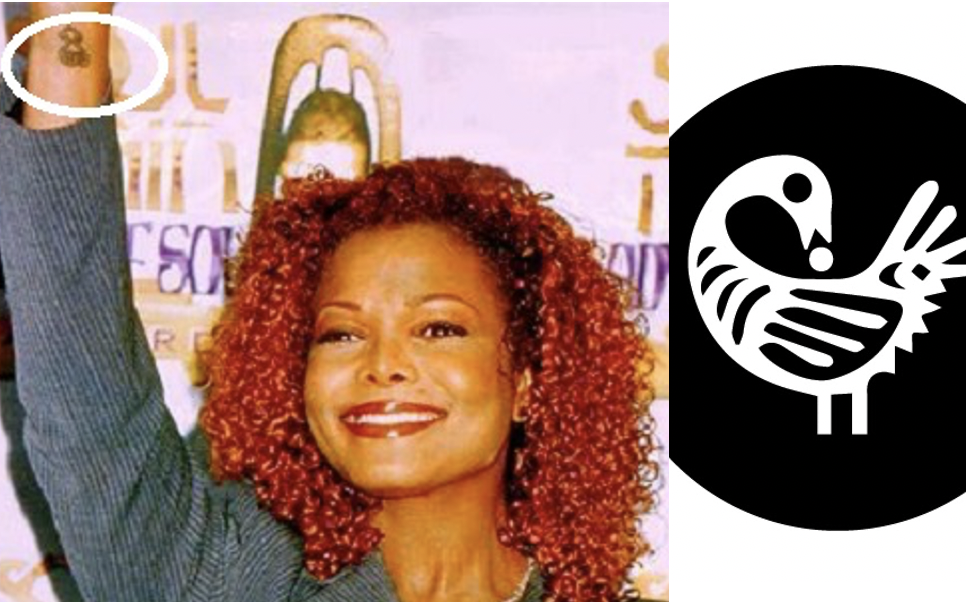
The Sankofa bird is an image born of West African cultures whose translation means “it is not taboo to go back and fetch what is at risk of being left behind.” This symbol has become important to Afro-futurism as a way to look to the past and to the future at once. It represents a frame of mind that both reflects and forges ahead, individually and collectively. The novel Sankofa is a story about a mixed-race British woman’s journey of self-discovery and identity construction. Even Janet Jackson has a Sankofa tattoo on her wrist.
Queer futurism builds off of the groundwork laid by Afro-futurism. So, then I wonder: what imagery or symbols are important to queer futurism? The rainbow is an easy one—it’s a colorful image, and one that can be, and has been added to in order to include more identities in the form of a flag. A rainbow happens when sunshine refracts off of falling rain—a metaphor rich with meaning about the lived experiences of queer people. It’s almost so prolific, though, that it’s lost some of its capacity for futurist symbolism in particular, though at the time of its inception it was an extremely important part of gay liberation, and persists today as an important representation of queer history.
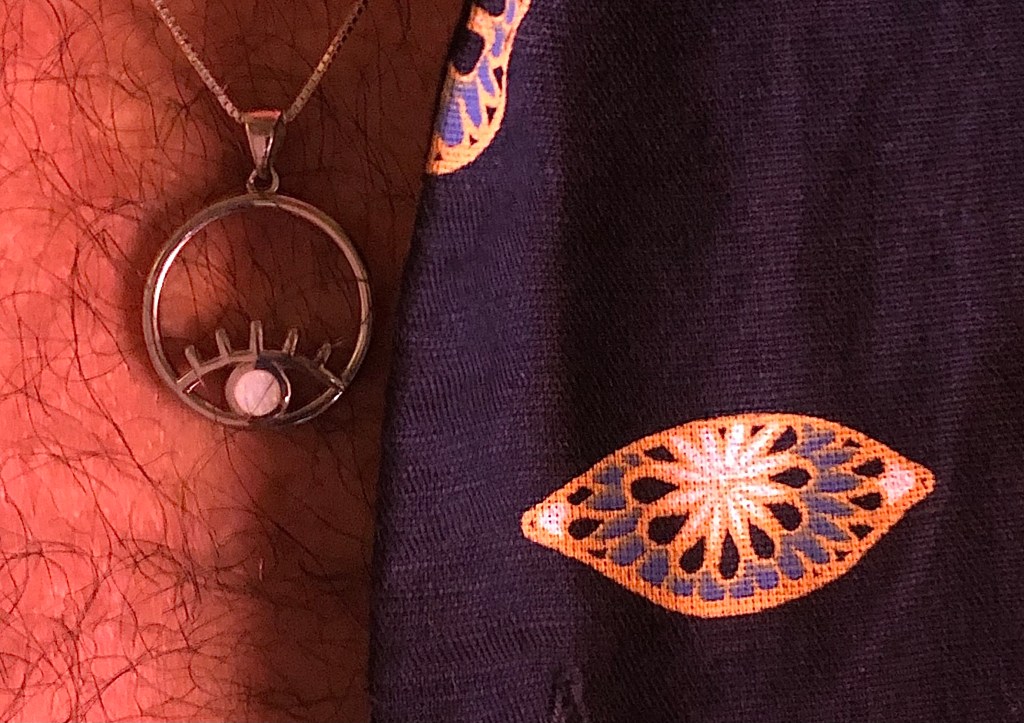
There’s no textbook on queer futurism. There’s not even a Wikipedia page devoted specifically to it, despite its prevalence in (pop) culture, especially right now. There’s no definitive list of our symbols, so I propose that one might be the image of an open eye. Although perhaps less culturally specific to queer people than the Sankofa is to Afro-futurists, and although it’s a symbol with histories in other cultures like Ancient Egypt and Arabic (eye of Ra; Nazar), the image of an open eye lends itself well to the ethos of queer futurism. The open eye represents observation and examination. It means seeing yourself and those like you, opening your eyes to the way things are, and crafting ideas about how things could be, how you could be. It’s waking up, looking ahead, seeing the future. It represents visibility and a vision of survival, prosperity and utopia.
There is no definitive or exhaustive list, nor laws to which we must adhere. Herein lies some of queer futurism’s beauty and boundless potential. It’s an invitation to think of your own version of the future, invent your own symbols and pray to your own deities.
Leo Hererra wrote “Queer people are not taught to think about our future… Queer people are not taught to think about our spirituality… In this time of plague, climate and economic crisis, when making plans feels futile and overwhelming, remember this: Imagining your queer future is a form of prayer.”
It’s a form of prayer not only for one’s self and one’s own future, but for the lives of queers in the future, too. Queer futurism is a developing tradition of piecing together sacred texts from our histories and carrying forward their legacy. To construct one’s own personal pillars of life/wisdom/belief while looking simultaneously backward and forward is a labor of self-love, and of love for anyone else out there who has felt, and will feel different, wrong, queer. It’s a way to feel connected to something greater.
Imagining what the future could look like for queer people is a way to understand hopes, uncertainties and fears, and to articulate them. It’s a way of holding them and sitting with them, and dreaming about how they might unfold. It’s also celebration, optimism, fantasy. It’s escapism, therapy, meditation and manifestation. It’s philosophy, philology, psychology and physiology. It’s a call to action, a call for reflection, a call for change. It’s a confrontation with the fact that what we do with our present will affect the present(s) of those who will come after us. It’s empathizing with them, and with those who came before us at the same time. It’s loving and holding hands with every queer person through time and forging an alliance with them. It’s taking a stab at clairvoyance, it’s creative speculation that moves us forward.
The way things are can be maddening, depressing, overwhelming. We live in broken systems. Queer futurism dreams of repaired systems and of entirely new systems. Queer futurism allows us to beta test learning from our mistakes and enacting positive change.
Queer people have always existed. The idea that gay people, trans people, nonbinary people are brand new is false. Just because we’ve invented new language to conceive of and discuss something doesn’t mean it wasn’t there before. As much as some might like to deny it, queer people of all kinds have not only existed since the dawn of humanity, they’ve likely been integral to our collective survival in more ways than one, too.
If you think about it, the future is pretty gay. There’s something inherently queer in thinking about different and new ways of life. It requires an acknowledgement that the status quo could change.
It’s human nature to wonder about ourselves, to tell stories and try to understand ourselves. Queer futurism is important because it creates an infrastructure for thinking outside the norm. It allows us to reconsider, to step out of bounds and evaluate the rules and structures that govern our world. Queer futurism is an ongoing and growing project of creating art and culture about queer people for queer people, while also encouraging everyone of all walks of life to imagine their own futures, too.
 Void Screaming